
Dear Folks,
If you have been keeping an eye on agricultural news this year, you might have seen a pretty staggering statistic roll out from the USDA: the total U.S. cattle inventory has contracted to 86.2 million head.
A 75-Year Historic Contraction: At 86.2 million head, the national beef herd is at its smallest level since 1951. Furthermore, the calf crop dropped to around 32.9 million head—the tightest supply of new calves born across the nation since 1941.
Back in Pasture Posts #287, we reflected on how conventional livestock farming used to run on our farm: we would raise calves until weaning, load them onto a trailer, take them to the local auction, and send them straight into the commodity feedlot pipeline. Back then, calf supplies across the country were deep and predictable. But today, the story is completely different. Multi-year droughts across the West, soaring input costs, and nationwide herd liquidation have created a massive squeeze. Big commercial packers are leaning heavily on imported foreign beef to fill grocery store shelves, while prices at the supermarket meat counter stay volatile.
For a farm like ours, that national reality translates directly into our day-to-day operations: finding the right calves for our 100% grass-fed and grass-finished program is harder today than it has ever been.
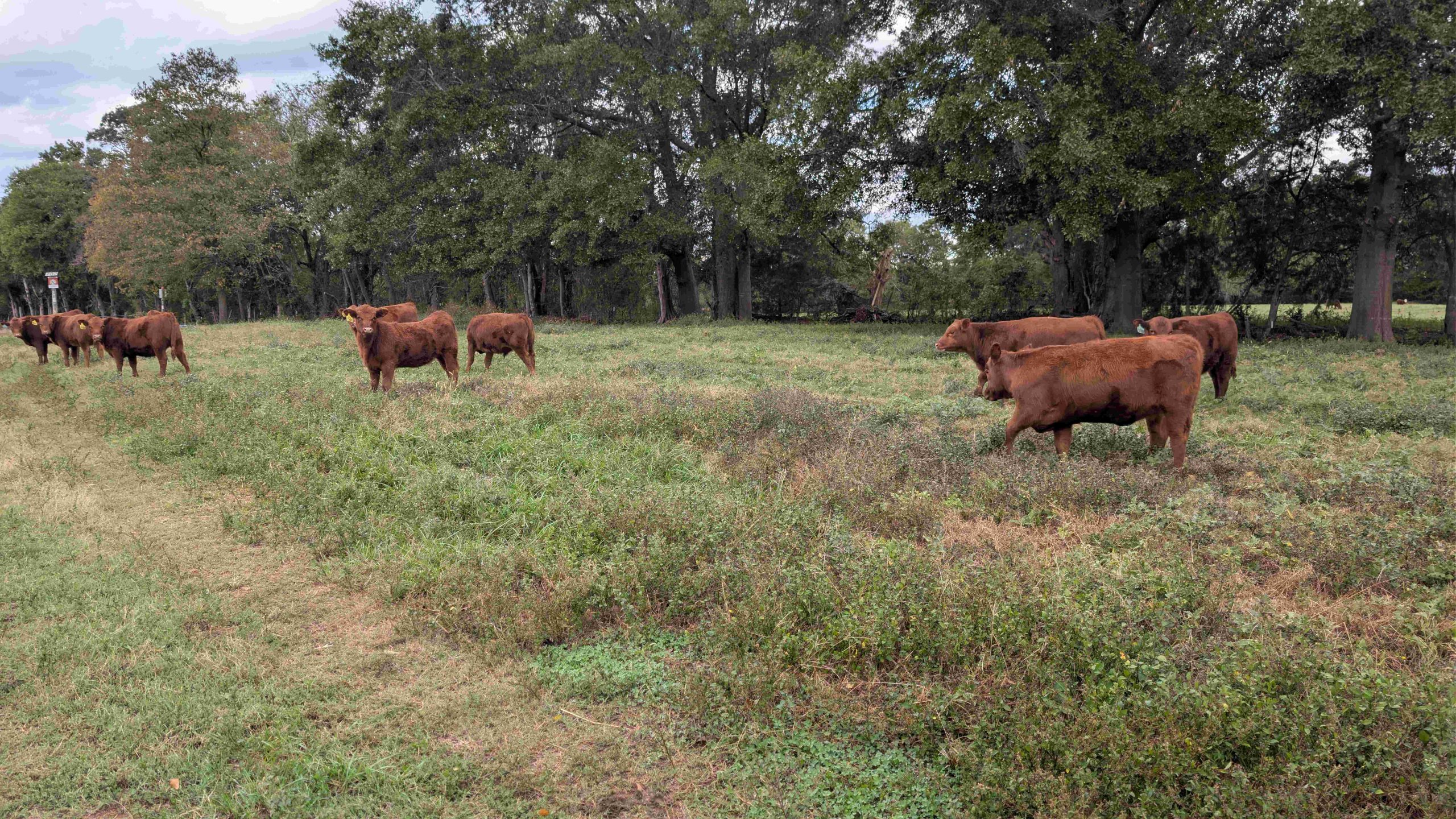
Enter Chuck: Our Modern-Day Cowboy
You can’t just run out and buy any conventional calf and expect it to finish on grass. In the industrial feedlot world, cattle are bred for massive frame sizes because feedlots pump them full of cheap grain and high-energy rations to force rapid weight gain. But in a 100% forage-based regenerative system, big, rangy frames struggle. We need specific genetics: smaller to moderate frame sizes, easy-fleshing genetics that put on healthy marbling on pure pasture, and calm, docile temperaments that respect single-strand polywire fencing.
That’s where our friend Chuck comes in. Chuck is a long-time cattleman—a true modern-day cowboy who knows livestock inside and out. He understands the exact, strict parameters our program demands.
A few weeks ago, Chuck brought us a fantastic set of 18 uniform Red Angus calves (pictured above). Then, just this past Thursday, another load of 6 calves rolled in, bringing our current herd count to 106 head.
Heading into the winter months, our target sweet spot is around 125 head. That inventory allows us to balance the carrying capacity of our ~300 acres of pasture through the dormant season while ensuring we have a continuous, steady supply of finished beef for your freezer a year down the road. We still have a little ground to make up to reach 125, but with Chuck keeping his eyes peeled across the region, we are confident we will hit our mark over the next few weeks.
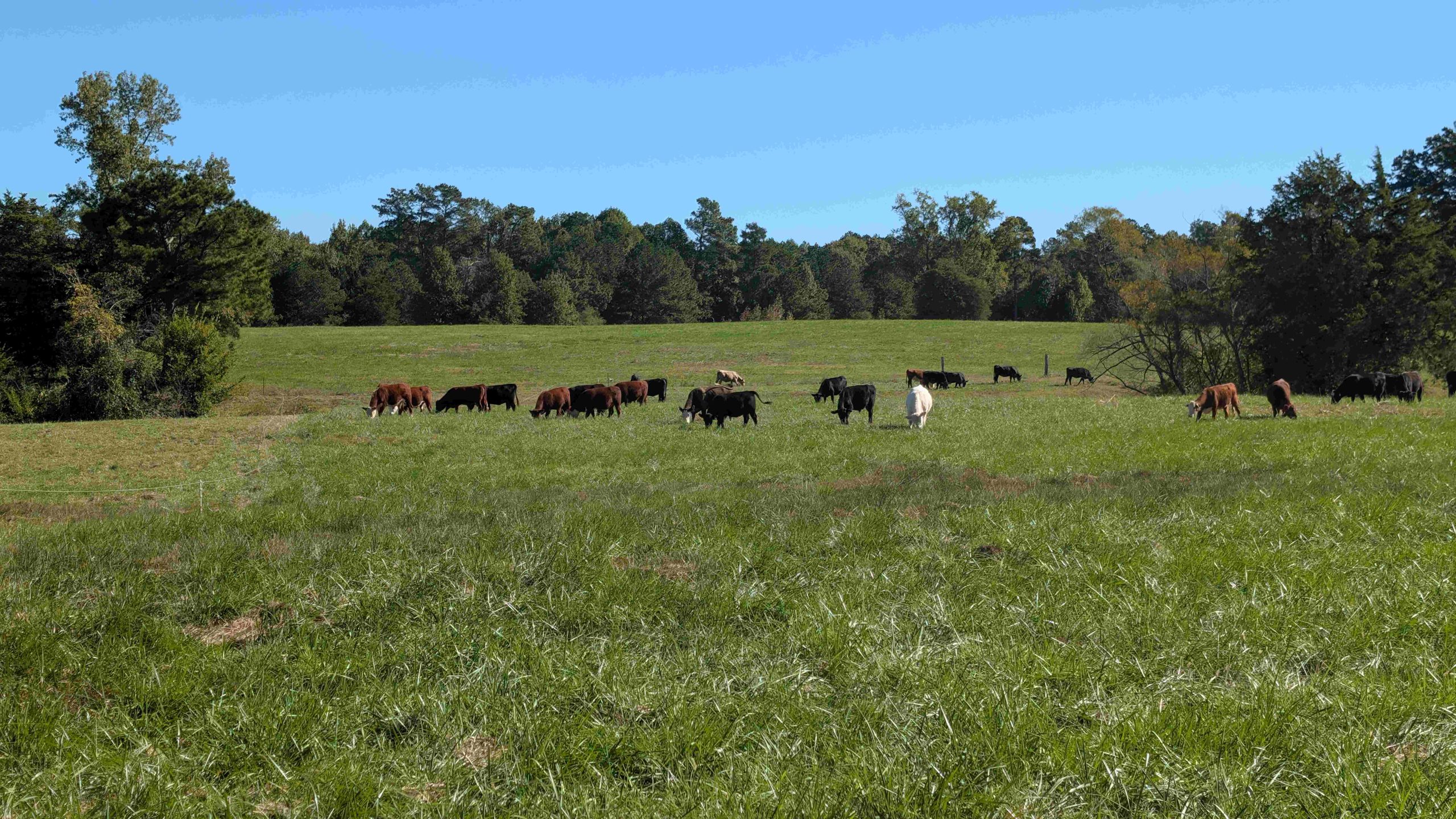
Sourcing Selectivity & “The Sale Ring”
Every now and then, folks ask an honest question: “If some calves are sourced through regional auction barns, how do you know what they were fed before arriving at Watson Farms?”
It’s a completely fair question, and the answer comes down to genetics, time, and transparency:
- Extreme Phenotype Selectivity: While we buy directly from local producers whenever they have the right cattle at the right price, regional auction rings give us the volume needed to be extraordinarily selective. To finish an animal purely on grass, you must have the right build—moderate frame, deep capacity, and easy-fleshing genetics. Chuck’s trained eye can spot immediately if a calf has been pushed on heavy feed, and those are passed right over.
- 100% Born in the USA: Every single calf we source was born right here in the United States. While industrial meatpackers import record volumes of live cattle and foreign beef to offset domestic shortages, our cattle are strictly domestic from day one.
- At Least 365 Days on Our Pastures: Calves arrive young—often around 400 to 500 lbs. They spend a minimum of a full year (365 days) and frequently up to 15 months rotating daily across our ~300 acres of living forage and drinking clean well water before harvest.
- A Complete Biological Reset: A full year to 15 months of active rotational grazing across diverse grasses, winter annuals, and clovers completely cleanses and remolds the animal’s biology. Their fat profile transforms naturally, loading up with beneficial CLA, vitamins A and E, and a healthy omega-6 to omega-3 ratio.
- Zero Feedlots, Zero Compromise: From the moment they step off the trailer in Lowrys, they never enter a feedlot, never receive routine antibiotics, and never receive growth hormones. Period.
By doing the hard legwork to source high-quality calves locally and finish them patiently on living soil, we’re building a dependable, regional food system that doesn’t depend on four multinational meatpackers or foreign imports. When you order from Watson Farms, you know exactly whose boots are on the ground stewarding your food.
🥩 Product Spotlight: Stock Your Freezer Ahead of Winter
As crisp autumn air and cooler weather settle in across the country, it’s prime time to get your slow cooker and soup pots ready:
- 1/8 Beef Bundle: The best way to lock in your family’s beef supply at bulk savings. Loaded with everyday ground beef, savory pot roasts, and premium steaks.
- Ground Beef (80/20) – 20 lb Bundle: Our #1 household staple. Clean, rich, single-origin grass-fed ground beef ready for chili, burgers, and family casseroles.
- Chuck Roast: Perfectly marbled for fall pot roasts that pull apart with a fork.
“We’ve been getting our meat here for the last few years, and it is always good. They have a great variety, and we really appreciate their dedication to regenerative agriculture.”
🚚 Shipping Timeline & Store Hours
📦 Orders for Shipping (Insulated with Dry Ice)
- Free Shipping on all orders over $199!
- Sitewide minimum order subtotal: $125.
- Orders under $199 ship for a flat rate of just $12.95 (Express zone customers pay $15).
- Orders normally ship out on Mondays – Wednesdays across the lower 48 states. Tracking links are emailed as soon as shipping labels are created.
🚜 Farm Pickup (Always Free!)
If you are local, Farm Pickup is often the fastest way to get your products. Please wait until you receive an email stating that your order is Ready for Pickup (typically 1 business day after ordering) before heading over.
📍 Farm Store & Pickup Hours (713 Colony Road, Chester, SC 29706):
- Monday, Tuesday, Thursday, Friday: 10:00 AM – 6:00 PM
- Saturday: 10:00 AM – 2:00 PM
- Wednesday & Sunday: Closed
Thanks again for being partners in this endeavor of local, pasture-raised proteins that has truly transformed our farm. We look forward to continuing this transition while serving you long into the future.
Sincerely,
Matt Watson and the entire Watson Farms Team