Here’s the weekly roundup from Watson Farms and your direct connection to your farmer. Enjoy the latest edition of Pasture Posts!
Why the Big Plants are Closing (And What It Means for Us)
I hope everyone had a wonderful Thanksgiving filled with family, rest, and plenty of good food. We certainly enjoyed the downtime and the chance to gather around the table, but as we head back into the weekly rhythm of the farm, there’s some heavy news in the cattle world that I feel is important to share with you.
We often talk about how different Watson Farms is from the “Big Four” meatpackers. And in almost every way that matters—how the animals are treated, how the land is managed, and the nutrient density of the final product—we are worlds apart. But this week, a major headline reminded us that we are all swimming in the same economic stream.
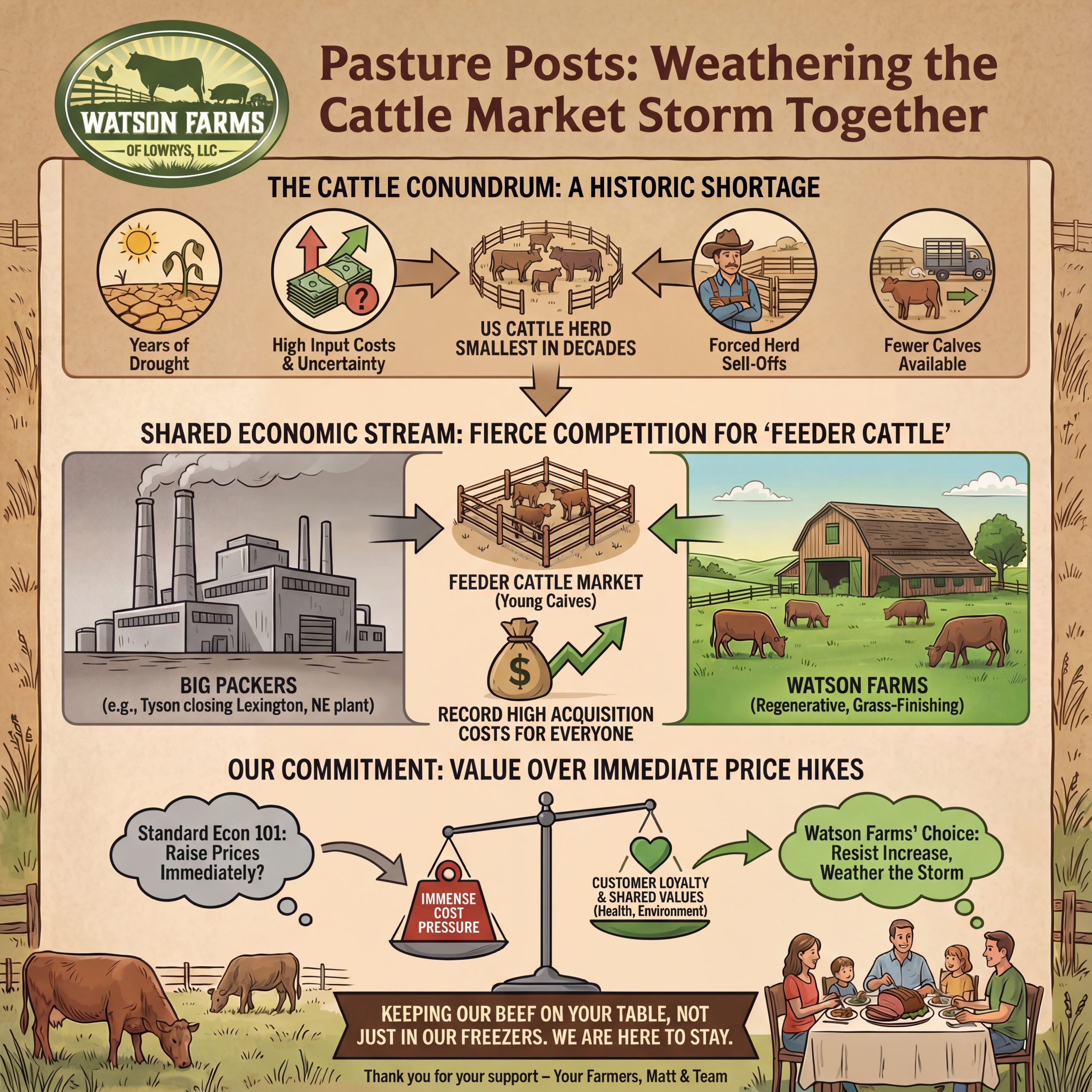
You might have seen the news that Tyson Foods is closing its massive beef plant in Lexington, Nebraska. This isn’t just a small blip; this is a facility that processes huge numbers of cattle. When a plant like that shutters, it’s a symptom of a much larger problem: there simply aren’t enough cattle in the United States right now.
The U.S. cattle herd has shrunk to its smallest size in decades. Years of drought, high input costs, and economic uncertainty have forced many ranchers to sell off their cows. The result is a historic shortage of calves.
Here is where the unexpected similarity between us and the giants like Tyson comes in.
While we finish our cattle on lush, regenerative pastures rather than in confinement feedlots, we generally don’t breed all our own calves from scratch. Like the big packers and feedlots, we have to go out into the market and purchase “feeder cattle” (young calves) to bring onto our farm for grass-finishing.
Because the national herd is so small, the competition for those calves is fierce. Whether you are a massive industrial feedlot or a direct-to-consumer regenerative farm like ours, the cost to acquire cattle has skyrocketed. In fact, we have had to pay more for cattle this year than ever before in the history of our farm.
The prices for these calves have hit record highs, and that puts an immense amount of pressure on our business.
Economics 101 would say that when our costs go up this much, our prices should follow immediately. And if I’m being honest, looking at the spreadsheet, we probably should have raised our beef prices significantly in the last 6 months to keep up with the market.
But we didn’t.
Continue reading Pasture Posts #249